RC Registered · Abuja, Nigeria

Empowering Education
Through Digital Innovation

GPIS Global Digital E-Learning Consultant Ltd delivers world-class professional training in technology, security, healthcare, public administration & business — for Nigeria’s globally competitive workforce.

📚 Explore Courses Get Started Free
🏆 Certified Courses
📊 Industry-Aligned
🌎 Global Standards
🎓
500+ Students
Enrolled & learning
Platform Overview
Your Learning Journey Starts Here
13+
Courses
6
Schools
3+
Certificates
100%
Online
📜
Globally Recognised Certificates
500+
Students Trained
20+
Professional Courses
6
Schools of Learning
100+
Certificates Issued
GPIS Global Students and Professionals
🏆
Certified Platform
RC Registered, Abuja Nigeria
✨ Top Rated E-Learning
About GPIS Global

A Forward-Thinking Digital Education Organisation

GPIS Global Digital E-Learning Consultant Ltd is committed to developing globally competitive professionals through innovative, flexible, and industry-aligned training programs for graduates, civil servants, corporate organisations, entrepreneurs and institutions.

Industry-relevant curriculum aligned with global standards
Flexible online & hybrid learning delivery
Practical, job-oriented training programs
Professional certification upon completion
Global professional preparation & certification prep
Join GPIS Today Browse Courses
MOS
Microsoft Office Specialist
PMP
Project Management
CompTIA
Security+ Preparation
Google
Career Certificates
Our Schools

Six Schools of Professional Learning

Comprehensive structured programmes across six professional schools designed for the modern Nigerian and global workforce.

💻

School of Digital Technology

  • Web Development
  • Cybersecurity
  • Data Analytics
  • Digital Marketing
  • AI & Emerging Technologies
🛡

School of Security & Strategic Studies

  • Corporate Security Management
  • Intelligence & Surveillance
  • Risk Assessment & Crisis Management
🏛

School of Public Administration

  • Governance & Policy
  • Civil Service Leadership
  • Government Project Management
🚀

School of Career & Professional Development

  • CV & Resume Development
  • Interview Mastery
  • Executive Leadership
  • Workplace Ethics
🏥

School of Healthcare & Community Development

  • Healthcare Administration
  • Public Health Foundations
  • Community Health Worker Training
💼

School of Business & Entrepreneurship

  • Business Management
  • HR & Operations
  • Financial Management
  • Entrepreneurship Development
Students learning online with GPIS Global
🎓 Live Classes Available
Course Completion Rate
94%
Why Choose Us

Everything You Need to Succeed Professionally

GPIS Global combines expert-led content, flexible scheduling, and industry-recognised certification in one complete learning platform.

🎯

Practical & Job-Oriented Training

Every course is built around real workplace skills with hands-on projects and assessments.

🌎

Global Certification Preparation

We align our curriculum with MOS, CompTIA, PMP, and Google career certificate standards.

📱

Flexible Online & Hybrid Learning

Study at your own pace with self-paced videos, live sessions, and downloadable content.

📊

Track Your Progress

Our built-in progress tracker keeps you motivated with visual completion percentages and milestones.

Our Courses

Featured Learning Programmes

View All Courses →
DAMS 130: AGRICULTURAL RISK AND INSURANCE MANAGEMENT SYSTEMS Business & Entrepreneurship ₦25,000

DAMS 130: AGRICULTURAL RISK AND INSURANCE MANAGEMENT SYSTEMS

DAMS 130: AGRICULTURAL RISK AND INSURANCE MANAGEMENT SYSTEMS Course Description DAMS 130: Agricultural Risk and Insurance Management Systems is a professional and industry-focused course designed to equip learners with the knowledge, skills, and competencies required to identify, assess, mitigate, and manage risks associated with agricultural production, agribusiness operations, and food systems. The course provides a comprehensive understanding of agricultural risk management principles and the application of modern insurance systems, digital technologies, and decision-support tools for enhancing resilience, sustainability, and profitability in agriculture. The course examines various categories of agricultural risks, including production risks, climate and weather-related risks, market and price volatility, financial risks, operational risks, technological risks, environmental risks, and policy-related uncertainties. Learners will develop the capacity to analyze risk factors affecting agricultural enterprises and implement effective strategies for risk reduction and business continuity. Special emphasis is placed on agricultural insurance mechanisms, including crop insurance, livestock insurance, aquaculture insurance, index-based insurance, weather insurance, farm asset insurance, and agribusiness liability coverage. Participants will explore the role of government policies, financial institutions, insurance providers, and international development agencies in promoting agricultural risk management and insurance adoption. The course further introduces digital risk assessment tools, Geographic Information Systems (GIS), Remote Sensing technologies, Artificial Intelligence (AI), Big Data Analytics, climate information systems, and early warning systems used for monitoring, forecasting, and managing agricultural risks. Learners will gain practical knowledge of risk modeling, insurance product design, claims management, and disaster recovery planning in agricultural enterprises. Upon successful completion of the course, participants will be able to design and implement comprehensive agricultural risk management and insurance strategies that support farm resilience, protect investments, improve productivity, and strengthen food security in line with international best practices and sustainable development goals. Learning Outcomes Upon successful completion of this course, learners will be able to: 1. Explain the concepts, principles, and importance of agricultural risk management. 2. Identify and assess various risks affecting agricultural production and agribusiness operations. 3. Analyze climate, market, financial, and operational risks in agriculture. 4. Develop risk mitigation and contingency management strategies. 5. Evaluate different agricultural insurance products and coverage options. 6. Apply digital technologies for risk assessment, monitoring, and forecasting. 7. Utilize GIS, Remote Sensing, and AI tools in agricultural risk management. 8. Design agricultural risk management plans for farms and agribusinesses. 9. Understand insurance claims processes, underwriting principles, and policy management. 10. Promote sustainable and resilient agricultural systems through effective risk and insurance management practices. Course Information Course Code: DAMS 130 Course Title: Agricultural Risk and Insurance Management Systems Programme: Digital Agriculture Management Systems (DAMS) Level: Professional Diploma/Certificate Programme Credit Unit: 2 Credit Units Course Category: Core Course Key Topics Introduction to Agricultural Risk Management Types and Sources of Agricultural Risks Climate Change and Agricultural Risk Production and Operational Risk Management Agricultural Market and Price Risk Analysis Financial Risk Management in Agriculture Crop and Livestock Insurance Systems Index-Based and Weather Insurance Models Farm Asset and Agribusiness Insurance Risk Assessment and Decision Support Systems GIS and Remote Sensing for Risk Monitoring Artificial Intelligence and Predictive Analytics in Risk Management Disaster Preparedness and Recovery Planning Insurance Claims Management and Policy Administration Agricultural Resilience and Sustainability Strategies Assessment Methods Assignments and Case Studies Risk Assessment Projects Insurance Policy Analysis Reports Practical Exercises and Simulations Continuous Assessment Tests Final Examination or Capstone Project Career Opportunities Graduates of this course may work as: Agricultural Risk Management Specialists Agricultural Insurance Officers Farm Business Consultants Agribusiness Risk Analysts Agricultural Development Officers Climate Risk Advisors Agricultural Finance and Insurance Consultants Agricultural Project Managers Food Security and Resilience Specialists Digital Agriculture and Risk Management Professionals Developed by: GPIS GLOBAL DIGITAL CONSULTANCY E-LEARNING LTD Standard: Aligned with International Best Practices in Agricultural Risk Management, Agricultural Insurance, Climate-Smart Agriculture, Digital Agriculture, Enterprise Risk Management (ERM), and Sustainable Agricultural Development.

📊 Advanced ⏱ 3 days

DAMS 130: AGRICULTURAL RISK AND INSURANCE MANAGEMENT SYSTEMS Business & Entrepreneurship Free

DAMS 130: AGRICULTURAL RISK AND INSURANCE MANAGEMENT SYSTEMS

DAMS 130: Agricultural Risk and Insurance Management Systems Course Description DAMS 130: Agricultural Risk and Insurance Management Systems is a comprehensive course designed to equip participants with the knowledge, skills, and practical tools required to identify, assess, manage, and mitigate risks within agricultural production and agribusiness operations. The course explores the principles of agricultural risk management, insurance systems, climate resilience, financial protection mechanisms, and emerging technologies that support sustainable agricultural development. Participants will gain an in-depth understanding of the various risks affecting agriculture, including production, market, financial, institutional, environmental, and technological risks. The course also examines the role of agricultural insurance products, government policies, risk financing instruments, and digital innovations in enhancing farm resilience and food security. Through practical case studies, real-world examples, and interactive learning activities, participants will develop the capacity to design and implement effective risk management strategies for farmers, agribusiness enterprises, cooperatives, development organizations, and agricultural institutions. Course Objectives Upon successful completion of this course, participants will be able to: 1. Understand the concepts, principles, and importance of agricultural risk management. 2. Identify and analyze major sources of risk in agricultural production and agribusiness. 3. Evaluate different agricultural insurance products and risk transfer mechanisms. 4. Develop risk mitigation and adaptation strategies for climate-smart agriculture. 5. Apply financial and insurance tools to improve agricultural sustainability and profitability. 6. Utilize digital technologies and data-driven approaches for agricultural risk assessment and management. 7. Assess the role of government policies, financial institutions, and international organizations in agricultural risk management. 8. Design practical agricultural risk management plans for farms and agribusiness enterprises. Key Topics Covered Introduction to Agricultural Risk Management Types and Sources of Agricultural Risks Climate Change and Agricultural Risk Farm Risk Assessment and Analysis Agricultural Insurance Principles and Practices Crop Insurance Systems Livestock Insurance Systems Weather Index-Based Insurance Agricultural Finance and Risk Mitigation Digital Technologies in Agricultural Risk Management Disaster Risk Reduction and Resilience Building Agricultural Policy and Regulatory Frameworks Food Security and Risk Management Case Studies and Best Practices in Agricultural Insurance Target Participants This course is suitable for: Farmers and Farmer Organizations Agricultural Extension Officers Agribusiness Managers and Entrepreneurs Agricultural Consultants Development Practitioners Insurance Professionals Financial Service Providers Researchers and Academics Government Officials and Policy Makers Students and Youth in Agriculture Duration Three (3) Days Intensive Training Programme Certification Participants who successfully complete the course requirements and assessment will be awarded a Certificate in Agricultural Risk and Insurance Management Systems issued by GPIS Global Digital Consultancy E-Learning Ltd. Expected Outcome At the end of the programme, participants will possess practical competencies in agricultural risk identification, risk assessment, insurance management, climate adaptation strategies, and the application of innovative tools for improving agricultural productivity, resilience, and food security in line with international best practices and sustainable development goals (SDGs).

📊 Advanced ⏱ 3 days
50. AI 150: Executive summary in Artificial Intelligence and Innovation - 5 CPD POINTS Digital Technology Free

50. AI 150: Executive summary in Artificial Intelligence and Innovation - 5 CPD POINTS

AI 150: Executive Summary in Artificial Intelligence and Innovation – 5 CPD Points Course Code: AI 150 Course Title: Executive Summary in Artificial Intelligence and Innovation CPD Points: 5 Course Description: This course serves as the executive-level synthesis and strategic review of key concepts, applications, innovations, and leadership considerations in Artificial Intelligence (AI). It provides participants with a comprehensive overview of AI technologies, emerging innovations, governance frameworks, digital transformation strategies, and future opportunities for organizations and society. The course is designed to consolidate knowledge gained throughout the Artificial Intelligence Professional Development Programme and equip participants with the strategic insights necessary to lead, manage, and support AI-driven initiatives. Participants will examine the role of AI in innovation, organizational growth, decision-making, competitiveness, sustainability, and global development. Special emphasis is placed on executive leadership, policy development, innovation management, ethical governance, and the strategic adoption of AI technologies across various sectors. The course concludes with reflections on future trends and the evolving role of AI in shaping the global economy and digital society. Learning Outcomes Upon successful completion of this course, participants will be able to: 1. Summarize key concepts, technologies, and applications of Artificial Intelligence. 2. Evaluate the strategic role of AI in innovation and organizational transformation. 3. Analyze emerging opportunities and challenges associated with AI adoption. 4. Understand executive leadership responsibilities in AI-driven environments. 5. Assess governance, ethical, regulatory, and risk management considerations. 6. Develop strategic frameworks for AI implementation and innovation management. 7. Promote responsible, sustainable, and inclusive AI adoption. 8. Formulate executive-level recommendations for leveraging AI to achieve organizational goals. Course Contents Executive Overview of Artificial Intelligence Review of Core AI Technologies and Applications AI and Organizational Innovation Strategic Leadership in the Age of Artificial Intelligence AI-Driven Digital Transformation and Competitiveness Innovation Management and Emerging Technologies AI Governance, Ethics, and Regulatory Frameworks Risk Management and Organizational Resilience AI in Business, Government, Education, and Development Sustainable and Responsible AI Adoption Future Trends and Strategic Foresight in AI Executive Decision-Making and AI Strategy Lessons Learned from AI Implementation Case Studies Final Programme Reflection and Strategic Action Planning Assessment Method Participation in Executive Discussions and Strategic Reviews Case Study Analysis Executive Reflection Paper Strategic Action Plan Development Final Quiz/Assessment Certification Participants who successfully complete the course will receive a Certified Professional Development (CPD) Certificate in Executive Summary in Artificial Intelligence and Innovation worth 5 CPD Points. Duration 5 Contact Hours / Executive Professional Development Course. Programme Completion Outcome Upon completion of AI 150, participants will have acquired a comprehensive understanding of Artificial Intelligence, its practical applications, governance requirements, innovation opportunities, and leadership implications. They will be equipped to make informed strategic decisions, lead AI-driven initiatives, support digital transformation, and contribute to responsible innovation within their organizations and communities. This course serves as the concluding executive-level module of the Artificial Intelligence Professional Development Programme, integrating the knowledge, competencies, and practical insights developed throughout the entire AI curriculum.

📊 Beginner ⏱ 5days
47. AI147: AI AND KNOWLEDGE MANAGEMENT -- 4 CPD POINTS Digital Technology Free

47. AI147: AI AND KNOWLEDGE MANAGEMENT -- 4 CPD POINTS

AI 147: AI and Knowledge Management – 4 CPD Points Course Code: AI 147 Course Title: AI and Knowledge Management CPD Points: 4 Course Description: This course provides participants with a comprehensive understanding of how Artificial Intelligence (AI) is transforming knowledge management processes within organizations. The course explores the use of AI technologies to capture, organize, analyze, share, and utilize knowledge for improved decision-making, innovation, organizational learning, and operational efficiency. Participants will examine how machine learning, natural language processing, intelligent search systems, knowledge graphs, expert systems, and generative AI tools enhance knowledge creation, retention, dissemination, and utilization. The course also addresses governance, data quality, ethical considerations, information security, and best practices for implementing AI-powered knowledge management systems. This course is designed for knowledge managers, business leaders, researchers, educators, librarians, consultants, information management professionals, policymakers, and individuals interested in leveraging AI for organizational learning and knowledge-driven innovation. Learning Outcomes Upon successful completion of this course, participants will be able to: 1. Explain the concepts and significance of AI in knowledge management. 2. Understand AI-powered tools and technologies for knowledge creation and sharing. 3. Analyze methods for capturing and organizing organizational knowledge. 4. Apply AI solutions to improve information retrieval and decision-making. 5. Evaluate the role of AI in organizational learning and innovation. 6. Assess ethical, governance, and security issues related to knowledge management systems. 7. Develop strategies for implementing AI-enabled knowledge management practices. 8. Promote knowledge sharing, collaboration, and continuous learning within organizations. Course Contents Introduction to AI and Knowledge Management Fundamentals of Knowledge Management Systems Knowledge Creation, Capture, and Retention AI Technologies for Knowledge Discovery Natural Language Processing and Intelligent Search Systems Knowledge Graphs and Expert Systems Generative AI for Knowledge Creation and Documentation Organizational Learning and Knowledge Sharing Decision Support and Knowledge-Based Systems Information Governance and Data Quality Management Information Security and Privacy Considerations Ethics and Responsible AI in Knowledge Management Challenges and Opportunities in AI Adoption Future Trends in AI-Driven Knowledge Management Assessment Method Participation in Discussions and Learning Activities Knowledge Management Case Study Analysis Practical Assignments and Exercises Short Quiz/Assessment Certification Participants who successfully complete the course will receive a Certified Professional Development (CPD) Certificate in AI and Knowledge Management worth 4 CPD Points. Duration 4 Contact Hours / Professional Development Course.

📊 Beginner ⏱ 3 days
43. AI 143: AI and Organisations Development - 4 CPD POINTS Digital Technology Free

43. AI 143: AI and Organisations Development - 4 CPD POINTS

AI 143: AI and Organizational Development – 4 CPD Points Course Code: AI 143 Course Title: AI and Organizational Development CPD Points: 4 Course Description: This course provides participants with a comprehensive understanding of how Artificial Intelligence (AI) is transforming organizational development, workforce effectiveness, institutional growth, and change management. The course explores the strategic application of AI technologies to improve organizational performance, enhance productivity, support innovation, strengthen decision-making, and facilitate sustainable development within organizations. Participants will examine how AI-driven analytics, intelligent automation, workforce planning, performance management systems, and digital transformation initiatives contribute to organizational effectiveness. The course also addresses leadership, culture change, employee engagement, governance, ethics, and risk management considerations associated with AI-enabled organizational development. This course is designed for organizational development professionals, business leaders, managers, human resource practitioners, consultants, policymakers, educators, researchers, and individuals interested in organizational transformation and digital innovation. Learning Outcomes Upon successful completion of this course, participants will be able to: 1. Explain the role and significance of AI in organizational development. 2. Understand AI-driven approaches to organizational effectiveness and performance improvement. 3. Analyze the impact of AI on workforce development and organizational culture. 4. Apply AI tools for strategic planning, change management, and decision-making. 5. Evaluate the use of intelligent automation and analytics in organizational processes. 6. Assess ethical, governance, and risk management issues related to AI adoption. 7. Develop strategies for managing organizational transformation in the digital era. 8. Promote innovation, adaptability, and continuous improvement through AI integration. Course Contents Introduction to AI and Organizational Development Organizational Effectiveness in the Digital Age AI-Driven Strategic Planning and Decision-Making Workforce Development and Talent Management Organizational Culture and Digital Transformation Intelligent Automation and Process Improvement Performance Management and Organizational Analytics Change Management in AI-Enabled Organizations Employee Engagement and Productivity Enhancement Leadership and Organizational Innovation Governance, Ethics, and Responsible AI Use Risk Management and Organizational Resilience Challenges and Opportunities in AI Adoption Future Trends in AI and Organizational Development Assessment Method Participation in Discussions and Learning Activities Organizational Development Case Study Analysis Practical Assignments and Strategic Exercises Short Quiz/Assessment Certification Participants who successfully complete the course will receive a Certified Professional Development (CPD) Certificate in AI and Organizational Development worth 4 CPD Points. Duration 4 Contact Hours / Professional Development Course.

📊 Beginner ⏱ 3 days
Introduction to Digital Agriculture Management system Digital Technology Free

Introduction to Digital Agriculture Management system

Introduction to Digital Agriculture System Digital Agriculture System refers to the integration of modern digital technologies into agricultural practices to improve productivity, efficiency, sustainability, and food security. It combines advanced tools such as artificial intelligence (AI), Internet of Things (IoT), data analytics, mobile applications, geographic information systems (GIS), drones, smart irrigation systems, and cloud-based platforms to support effective farm management and agricultural decision-making. The system is designed to transform traditional farming into smart and technology-driven agriculture by enabling farmers, agribusinesses, researchers, and policymakers to access real-time information, monitor agricultural activities, optimize resource utilization, and increase overall agricultural output. Digital Agriculture promotes precision farming techniques that help farmers make informed decisions regarding soil management, crop health monitoring, pest and disease control, weather forecasting, irrigation scheduling, livestock management, supply chain tracking, and market access. Through the use of digital platforms, farmers can also access financial services, agricultural training, extension support, and global market opportunities. In today’s rapidly evolving agricultural sector, Digital Agriculture Systems play a vital role in addressing global challenges such as climate change, food insecurity, population growth, and limited agricultural resources. By leveraging innovation and digital transformation, the system enhances sustainability, reduces operational costs, minimizes waste, and improves the quality and quantity of agricultural production. The introduction of Digital Agriculture Systems is therefore essential for building resilient agricultural economies, empowering farmers with modern skills, encouraging youth participation in agriculture, and promoting sustainable rural development in line with international agricultural and technological standards.

📊 Advanced ⏱ 3 days
Professional Certificates

Earn Globally Recognised Certificates

Complete your course, purchase your certificate, and receive an official GPIS credential that validates your new skills to employers worldwide.

Uniquely numbered certificate per student
Verifiable online certificate registry
Aligned with global certification frameworks
Preparation for MOS, CompTIA, PMP & Google
Start Learning Today
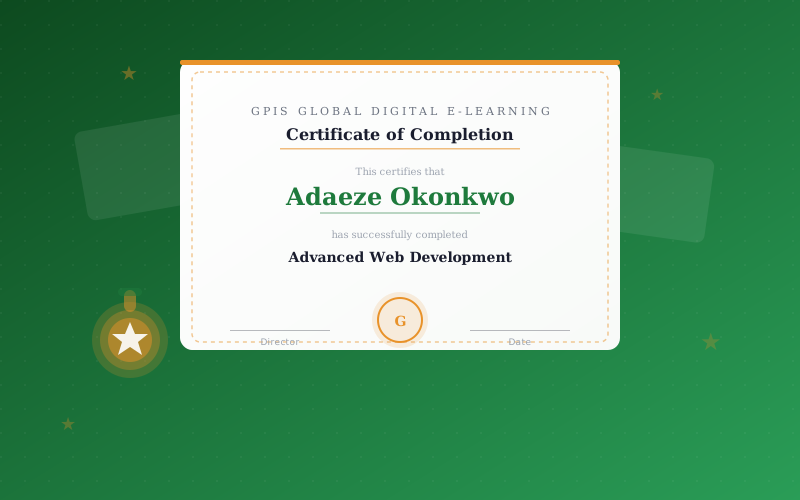
GPIS Certificate of Completion
Why GPIS?

The GPIS Advantage

We combine industry expertise, flexible delivery, and professional certification to give you every career advantage.

📱

Flexible Online & Hybrid Learning

🎯

Practical Job-Oriented Training

🏆

Professional Certification

🌎

Global Career Preparation

📊

Industry-Relevant Curriculum

Testimonials

What Our Students Say

Thousands of professionals across Nigeria have transformed their careers with GPIS Global.

★★★★★

“*OFFICIAL APPOINTMENT OF AMBASSADORS* *GPIS GLOBAL DIGITAL CONSULTANCY E-LEARNING LTD* *2026 – 2027 AMBASSADORIAL CORPS* GPIS Global Digital Consultancy E-Learning Ltd is pleased to announce the appointment of distinguished professionals and strategic partners as Ambassadors for the 2026–2027 Ambassadorial Term. These appointments recognize individuals and organizations who have demonstrated exceptional commitment to educational advancement, digital transformation, leadership development, innovation, communityu engagement, and the promotion of global best practices in learning and consultancy services. The appointed Ambassadors will serve as representatives of GPIS Global Digital Consultancy E-Learning Ltd, supporting the organization's mission of advancing digital education, professional development, entrepreneurship, technology adoption, research, and international collaboration. *OFFICIAL LIST OF AMBASSADORS (2026–2027)* *1. EGBUNU ELEOJO HELEN – Ogun State, Nigeria* *2. ALADEGBAMI TOYIN – Nigeria* *3. TOM CLARKE – Liberia* *4. JOSEPH AMEN – Nigeria* *5. OYEWOLE AMUDA ASHAOLU – Nigeria* *6. JAFIYA ZUBAIRU – Nigeria* *7. ARIBEGAIUS VENTURES LTD – Nigeria* *8. FRIDAY ATTAH – Nigeria* *9. JUDITH BOSEDE SIMONYAN – Nigeria* *10. DR. JAMILA MUSA HASSAN – Nigeria* GPIS Global Digital Consultancy E-Learning Ltd extends its heartfelt congratulations to all appointed Ambassadors. We are confident that their expertise, dedication, and leadership will contribute significantly to the achievement of our vision of creating a globally connected and digitally empowered society. Together, we shall continue to promote excellence, innovation, sustainable development, and transformational learning across communities, institutions, and nations. Congratulations to the GPIS Global Ambassadorial Team 2026–2027. *Signed:* AMB. DR. JANAGWU NOAH MONDAY, BSc Edu, MSc Edu, FIOARM, ICECN Chief Executive Officer / Managing Director GPIS Global Digital Consultancy E-Learning Ltd Date: 7 June 2026 gpisglobal.com”

G
GPIS Admin
Moderator
★★★★★

“GPIS GLOBAL DIGITAL CONSULTANCY E-LEARNING LTD – Progress Report and Testimonial We are pleased to share the remarkable progress recorded by GPIS GLOBAL DIGITAL CONSULTANCY E-LEARNING LTD within the past three months. Through dedication, professionalism, and a commitment to quality digital learning, the organization has successfully engaged over 500 participants in various professional development and capacity-building programs. Our learning activities have been supported by a team of 16 qualified facilitators, including experts from both Nigeria and the international community, bringing diverse knowledge and global best practices to our participants. As part of our commitment to recognizing excellence and successful learning outcomes, more than 50 professional certificates have been issued to deserving participants who successfully completed their respective programs. The achievements recorded so far are a testament to the hard work and commitment of our Board of Directors, facilitators, staff members, and participants, whose collective efforts continue to drive the organization toward greater success. By the grace of God, GPIS GLOBAL DIGITAL CONSULTANCY E-LEARNING LTD remains focused on expanding opportunities for learning, innovation, professional development, and digital transformation across Nigeria and beyond. We sincerely appreciate the trust and support of all our stakeholders and look forward to achieving even greater milestones in the months ahead. Together, we are building a future of knowledge, innovation, and professional excellence. Management GPIS GLOBAL DIGITAL CONSULTANCY E-LEARNING LTD Empowering People Through Digital Learning and Professional Development”

A
AMB DR JANAGWU NOAH MONDAY'
CEO/ MD

Ready to Transform Your Career?

Join thousands of professionals who have advanced their careers with GPIS Global. Start your learning journey today with flexible online courses designed for the Nigerian professional.

Create Free Account Browse Courses